
What to Pack for a Day Hike: The Beginner’s Complete Checklist
There’s a particular kind of anxiety that hits when you’re standing in your bedroom the night before your first hike, staring at your bag, wondering if you’ve packed too much or not nearly enough.
The good news is that day hiking doesn’t require a lot of gear. The better news is that once you’ve done it a few times, packing becomes second nature. But for that very first time, a clear list goes a long way.
Here’s everything you actually need for a day hike — broken down simply, with no unnecessary gear-buying required.
The golden rule before we start
Pack light, but don’t cut corners on the essentials. The goal is to carry everything you need and nothing you don’t. A good rule of thumb: if you’re not sure whether you’ll need it, ask yourself what happens if you don’t have it. If the answer is “I’d be uncomfortable but fine,” leave it home. If the answer is “I could be in trouble,” pack it.
Water — more than you think
This is the one thing most beginners underpack. In Australia especially, dehydration can sneak up on you fast.
For a half-day hike (2–3 hours), bring at least 1 litre. For a full day hike (4–6 hours), bring 2 litres minimum. If it’s hot, add more.
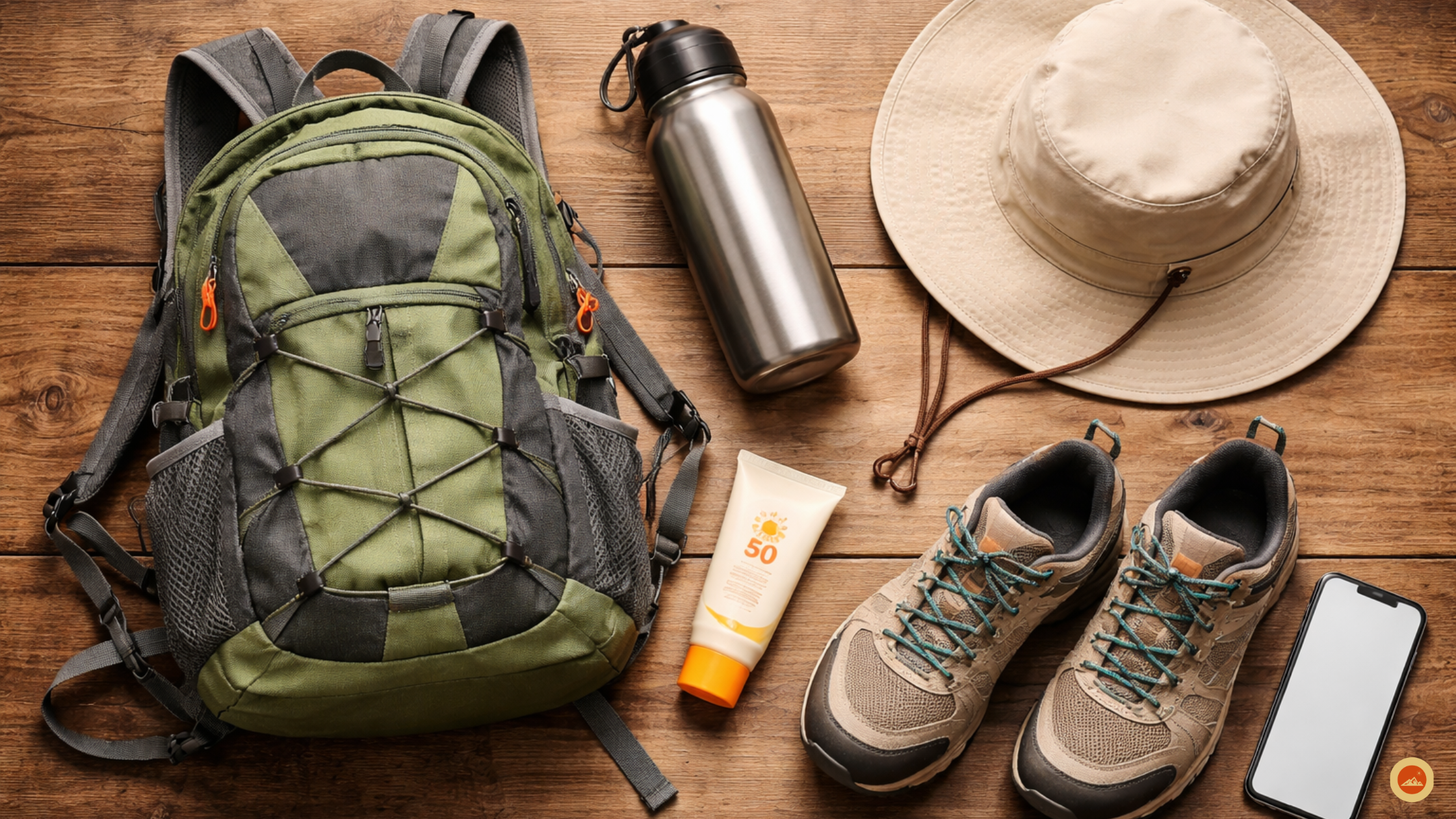
A reusable water bottle works perfectly. If you’re going to hike regularly, a hydration bladder that sits inside your pack is worth the investment — but absolutely not required for your first few walks.
Food and snacks
You burn more energy hiking than you expect, and low blood sugar on a trail is not fun. Pack more food than you think you’ll need.
Good options that travel well and give you sustained energy: muesli bars, trail mix, a sandwich or wrap, fruit, crackers and cheese, nut butter sachets. Avoid anything that melts easily or needs refrigeration.
A small treat — chocolate, a good biscuit, something you actually love — is always worth the weight. You’ve earned it.
Sun protection
Australia’s sun is genuinely brutal, and being outdoors for hours with no shade cover is a different experience from walking to your car.
Pack: sunscreen (and reapply during the hike), sunglasses, and a hat. A buff or lightweight neck gaiter is also great for extra coverage on exposed sections.
Don’t skip this. Sunburn on a hike will ruin your day and possibly the next few days after it.
The right footwear
You don’t need hiking boots for your first day hike. For well-maintained, marked trails, a pair of comfortable, supportive sneakers with grip on the sole will do the job completely.
What you want to avoid: thongs, sandals without ankle support, brand new shoes you haven’t broken in, or anything with a slippery sole. If you do decide to invest in hiking footwear, trail runners are a great starting point — lighter than boots and versatile enough for most beginner trails.
Whatever you wear, make sure you’ve walked in it before. Blisters on a trail are miserable.
Clothing layers
Even on a warm day, temperatures can drop in shaded valleys, at higher elevations, or if the weather changes. A basic layering system makes all the difference.
Start with a moisture-wicking base layer — anything that pulls sweat away from your skin rather than holding it (avoid cotton where possible). Add a light mid layer like a fleece or zip-up that you can tie around your waist if you warm up. And pack a light waterproof or wind-resistant jacket in your bag, even if rain isn’t forecast.
The goal isn’t to carry a lot — it’s to be able to adjust to whatever the trail throws at you.
Navigation
This one surprises beginners but it matters: don’t rely solely on phone signal for navigation on the trail.
Before you leave, download the trail map offline in Google Maps or a hiking app like AllTrails or Wikiloc. Screenshot the route as a backup. If you’re on a well-marked trail, this is mainly a precaution — but it’s a good habit to build from the start.
A fully charged phone before you leave is non-negotiable. A portable power bank is a smart addition to your kit.
A basic first aid kit
You don’t need a full medical kit for a day hike on a popular trail. But a small pouch with these basics is worth having:
Bandaids in a few sizes, blister plasters (these are different from regular bandaids — worth it), antiseptic wipes, a couple of pain relief tablets, and any personal medication you take regularly. That’s it. Fits in a small zip pouch and weighs almost nothing.
One last thing
Tell someone where you’re going and when you expect to be back. It takes thirty seconds and it’s one of the most important safety habits you can build. Send a message, share your location, or drop a note. Then go enjoy your hike.
The trail is ready when you are.